Fleet Overview > Fleet Management
EV Fleet Management
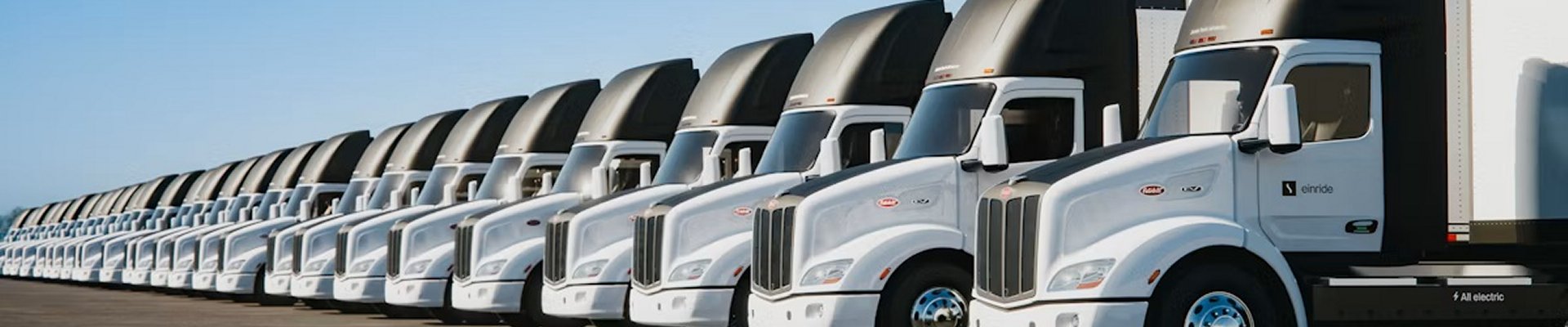
Fleet management is no longer just about dispatch, driver scheduling, and maintenance tracking. As fleets become electrified, autonomous, and robotic, management shifts from a conventional operations function to a software-defined orchestration layer. Vehicles, chargers, depots, robots, sensors, batteries, software platforms, and energy systems must increasingly operate as one coordinated machine.
This shift matters because fleet performance is now shaped by more than route efficiency and utilization. It is increasingly shaped by charging windows, battery state of charge, thermal conditions, software uptime, telematics quality, autonomy stack readiness, depot throughput, and how well a fleet operator can coordinate mobile assets with fixed infrastructure. The result is a new management model that is more data-intensive, more automated, and more tightly linked to energy and software systems than legacy fleet operations ever were.
This page provides a top-level overview of fleet management across electrified, autonomous, and robotic fleets. It covers the operational layers that matter most: asset visibility, energy and charging coordination, dispatch and routing, maintenance and uptime, software and telematics, safety and compliance, depot and yard operations, and the broader transition toward intelligent multi-asset orchestration.
Why Fleet Management Is Changing
Legacy fleets were largely managed around vehicles, fuel, drivers, and maintenance intervals. That model still matters, but it is no longer sufficient. Electrified fleets must manage charging availability, battery health, dwell times, demand charges, thermal preconditioning, and route-energy fit. Autonomous fleets must manage remote oversight, software version control, exception handling, safety cases, and service-area logic. Robotic fleets add charging docks, task orchestration, mission timing, indoor or yard mapping, and coordination among machines that may not even carry human occupants.
This means fleet management is broadening from a transportation discipline into an operations-and-infrastructure discipline. The new fleet manager is increasingly managing energy, software, infrastructure, and machine behavior in addition to vehicles. That is especially true for large-scale EV fleets, autonomous depots, yard robots, drones, humanoids, and other software-defined asset classes.
| Fleet Type | Primary Management Focus | New Complexity Driver | Strategic Challenge |
|---|---|---|---|
| Conventional fleet | Dispatch, fuel, maintenance, utilization, driver operations | Incremental telematics and digital oversight | Improving efficiency without major architecture change |
| Electrified fleet | Charging, state of charge, route-energy fit, battery health, depot readiness | Energy becomes a central operational variable | Aligning assets, chargers, dwell time, and utility constraints |
| Autonomous fleet | Remote oversight, software state, safety interventions, autonomous dispatch logic | Vehicles increasingly act without direct human operators onboard | Maintaining safety, uptime, and exception handling at scale |
| Robotic fleet | Task orchestration, dock coordination, battery cycles, mission success, environment awareness | Machines may operate in indoor, campus, depot, warehouse, or mixed-use spaces | Coordinating many smaller assets with high software dependence |
Fleet Management Is Becoming an Orchestration Layer
The deeper shift is from managing individual assets to orchestrating dynamic systems. In an advanced fleet, the operator is no longer just asking where vehicles are. The operator is asking which assets are available, charged, healthy, updated, mission-ready, within service limits, safely routed, and aligned with infrastructure capacity. This requires a control layer that merges operational data, energy data, maintenance data, and mission logic into one decision framework.
For that reason, fleet management increasingly behaves like a supervisory software layer sitting above the assets themselves. It interacts with telematics, charging management systems, route planning, work-order systems, depot controls, autonomy stacks, and fleet analytics platforms. In the most advanced cases, it begins to resemble an operational control plane for mobile machines.
| Legacy Fleet View | Emerging Fleet View | Operational Result |
|---|---|---|
| Manage vehicles one by one | Manage the fleet as a coordinated operating system | Higher emphasis on system-level visibility and optimization |
| Fueling and maintenance are the main constraints | Energy, software, infrastructure, and uptime become joint constraints | More coordination required across previously separate teams |
| Telematics is mostly observational | Telematics becomes part of active control and orchestration | Data quality and actionability matter more than raw tracking volume |
| Depots are parking and fueling locations | Depots become energy, data, service, and autonomy coordination nodes | Facilities matter more in fleet strategy than before |
Core Fleet Management Functions
Regardless of asset type, most modern fleets depend on the same core management functions. They need real-time visibility into asset state. They need to know what is available, where it is, what mission it can perform, what energy it has, what faults it has, and whether it can complete the next assignment. They also need systems that translate this information into decisions rather than dashboards alone.
These functions become more important as fleets scale because manual coordination breaks down quickly. At low scale, a human dispatcher can often compensate for weak systems. At larger scale, the quality of the management stack becomes a direct determinant of throughput, uptime, and profitability.
| Function | What It Covers | Why It Matters | Typical Failure Mode |
|---|---|---|---|
| Asset visibility | Location, state of health, state of charge, status, fault state, mission readiness | Operators cannot manage what they cannot see clearly | Data is fragmented, stale, or not tied to action |
| Dispatch and assignment | Tasking the right asset to the right job at the right time | Directly drives utilization and service quality | Assets are assigned without considering energy, software, or service limits |
| Maintenance and uptime | Preventive maintenance, predictive alerts, work orders, service history, downtime control | Availability is often the real output metric of a fleet | Maintenance is reactive and disconnected from telemetry |
| Routing and mission planning | Route design, task sequencing, dwell planning, operational timing, mission fit | Poor planning wastes energy, labor, and asset capacity | Routes ignore charging, traffic, weight, terrain, or service complexity |
| Safety and compliance | Driver behavior, operational rules, incident tracking, auditability, safety controls | Safety failures scale faster than operational wins | Oversight lags behind increasingly automated operations |
Electrified Fleet Management
Electrified fleet management adds a major new variable to operations: energy. That sounds simple, but it changes almost everything. An electrified fleet operator must manage charging windows, charger availability, state of charge, battery degradation, route suitability, demand peaks, depot electrical constraints, and in some cases on-site energy systems such as solar, battery energy storage, or microgrids. The asset is no longer independent of the facility.
This is why EV fleet management is as much about infrastructure coordination as vehicle coordination. A fleet vehicle that returns empty to a depot with insufficient charger capacity is not just low on energy. It is an operational scheduling problem. Likewise, a vehicle that could technically complete a route may still be a poor dispatch choice if it disrupts charging queues, overloads power windows, or arrives at the next shift underprepared. Electrified fleets therefore require energy-aware fleet logic rather than conventional route logic alone.
| Electrified Fleet Layer | What Must Be Managed | Why It Matters | Main Operational Risk |
|---|---|---|---|
| Charging coordination | Charger assignment, queue timing, plug availability, session management | Charging access can be the gating constraint on fleet uptime | Bottlenecks caused by poor dwell planning or charger undercapacity |
| Energy-aware dispatch | Trip assignment based on state of charge, route length, payload, conditions, and reserve strategy | The best vehicle for the mission is not always the closest one | Route failure or forced mid-shift charging disruptions |
| Battery health management | Cycle behavior, thermal exposure, degradation trends, charge-rate stress, pack diagnostics | Battery condition directly affects range, uptime, and asset economics | Hidden degradation reduces fleet predictability over time |
| Depot and utility coordination | Power availability, site load, tariffs, demand peaks, storage, and facility scheduling | The fleet increasingly depends on site energy strategy | Electrical infrastructure becomes the real scaling limit |
Autonomous Fleet Management
Autonomous fleets add another layer of management complexity because the assets are expected to operate with reduced or absent onboard human control. That shifts the management burden toward remote oversight, software confidence, operational design domain limits, intervention workflows, and exception handling. It is not enough to know where the vehicles are. Operators need to know whether the autonomy stack is healthy, whether the mission remains within allowed conditions, and what happens when the vehicle encounters ambiguity.
This means autonomous fleet management depends heavily on software observability and escalation logic. The fleet platform must track sensor health, software version state, remote assist needs, disengagement events, safety incidents, and operational edge cases. At scale, these fleets are not simply managed like driver-based fleets with better maps. They are managed more like distributed robotic systems with a transportation interface.
| Autonomous Fleet Layer | What Must Be Managed | Why It Matters | Main Operational Risk |
|---|---|---|---|
| Remote oversight | Vehicle observation, intervention readiness, operator escalation, event handling | Autonomous assets still require management when reality diverges from nominal conditions | Insufficient support capacity during exception bursts |
| ODD compliance | Weather limits, route bounds, service area, traffic condition fit, environment suitability | Autonomy is only valid within a defined operating envelope | Vehicles are tasked outside safe or validated conditions |
| Software and sensor health | Version state, perception subsystem health, compute readiness, fault reporting | Software uptime is as important as mechanical uptime | Invisible software drift or degraded perception quality |
| Safety event management | Disengagements, incidents, near misses, audit trails, replay and review workflows | Continuous safety assurance is essential to deployment credibility | Weak incident feedback loops allow repeated failure patterns |
Robotic Fleet Management
Robotic fleets include a broad set of assets such as warehouse robots, yard tractors, tugs, delivery robots, drones, legged robots, humanoids, and other mobile or semi-mobile machines. These systems often operate in more constrained environments than road fleets, but they can still be more complex to coordinate because they depend heavily on task logic, dock networks, environment maps, charging behavior, mission sequencing, and machine-to-machine interaction.
Robotic fleet management is therefore about more than simple location tracking. It requires orchestration of jobs, zones, priorities, dwell, docking, battery state, software readiness, and interaction rules within the site. A warehouse or depot full of robots is not just a set of devices. It is a throughput system. Management quality determines whether that system flows smoothly or becomes congested, idle, or fragile under disruption.
| Robotic Fleet Layer | What Must Be Managed | Why It Matters | Main Operational Risk |
|---|---|---|---|
| Task orchestration | Mission assignment, queueing, priority rules, workflow synchronization | Robot value depends on useful work completed, not just machine uptime | High robot count with poor task allocation leads to low throughput |
| Dock and charging coordination | Dock access, wireless or contact charging, queue timing, return-to-base behavior | Robots often depend on tightly managed recharge cycles and staging points | Charging or docking becomes the system bottleneck |
| Map and environment management | Facility maps, restricted zones, geofences, temporary obstacles, route logic | Robots depend on environment structure more directly than human drivers do | Site changes outpace fleet software and route assumptions |
| Machine interaction and supervision | Inter-robot coordination, human-robot interaction, conflict resolution, exception handling | Dense robotic operations require more than standalone autonomy | Robots interfere with each other or with human workflows |
Software, Telematics, and Control Plane Visibility
Software and telematics are now foundational to all advanced fleet categories. They provide the visibility layer that lets operators understand asset state, route progress, health conditions, charging behavior, events, faults, and mission status. But visibility alone is not enough. The real advantage comes when this data is tied to operational decisions such as dispatch changes, charging instructions, service alerts, autonomy restrictions, or robotic task reassignment.
This is why telematics is evolving into a control plane rather than a passive dashboard layer. The fleet platform increasingly becomes the interface where data becomes action. In electrified fleets this may mean energy-aware dispatch. In autonomous fleets it may mean intervention workflows. In robotic fleets it may mean live mission rebalancing. The common theme is that observability and control are converging.
| Software Layer | What It Provides | Why It Matters | Common Weakness |
|---|---|---|---|
| Telematics and asset state | Real-time visibility into location, energy, health, status, and usage | Forms the operational truth layer for fleet decisions | Data is visible but not operationally integrated |
| Fleet control software | Dispatch rules, mission logic, charging logic, alerting, and orchestration workflows | Turns data into action and policy | Rigid rules fail under dynamic fleet conditions |
| OTA and version management | Software deployment, policy consistency, feature updates, rollback support | Fleet behavior increasingly depends on software state consistency | Version fragmentation creates unpredictable operations |
| Analytics and predictive insights | Trend analysis, efficiency metrics, battery health insights, fault prediction, throughput analysis | Supports continuous operational improvement | Analytics remain retrospective instead of decision-linked |
Maintenance, Uptime, and Lifecycle Management
In advanced fleets, uptime is often more important than raw asset count. A fleet with fewer highly available assets can outperform a larger fleet with poor maintenance coordination, software instability, weak charging discipline, or frequent autonomy exceptions. This is why maintenance increasingly needs to draw from both mechanical and digital signals. The service system must know not only what parts wear out, but what software faults, sensor drifts, battery trends, or charging abnormalities are emerging.
Lifecycle management also matters more because electric and robotic fleets often involve different wear patterns than legacy fleets. Batteries age differently than fuel tanks. Autonomous sensors require calibration and cleanliness discipline. Robots may wear through joints, wheels, contacts, or dock hardware based on mission type. Fleet management therefore has to evolve from interval-based maintenance toward condition-based and mission-aware maintenance.
| Uptime Layer | What Must Be Managed | Why It Matters | Main Failure Pattern |
|---|---|---|---|
| Preventive maintenance | Scheduled service, wear items, inspections, service intervals | Still forms the baseline discipline of reliable fleet operation | Intervals are used blindly without mission context |
| Condition-based maintenance | Telemetry-linked service triggers, fault trends, health thresholds | Allows service before failure without overservicing healthy assets | Poor signal quality leads to noisy or missed predictions |
| Software reliability management | Version stability, update validation, rollback capability, service compatibility | Software can create or eliminate downtime across the entire fleet | Operational rollout outruns validation discipline |
| Battery and mission lifecycle economics | Degradation trends, duty cycle fit, replacement timing, asset remanagement | Battery condition and mission suitability shape long-term fleet cost | Assets remain in mismatched roles as they age |
Depots, Yards, and Fixed Infrastructure
Modern fleets increasingly depend on fixed infrastructure as part of the operating model. That infrastructure may include depots, charging yards, service bays, staging areas, wireless charging pads, dock networks, battery swap points, networked gates, and on-site energy systems. As fleets become electrified and robotic, these facilities are no longer passive parking or storage spaces. They become active control nodes in the fleet system.
This is especially important because a fleet can only scale as fast as its fixed infrastructure allows. A high-quality vehicle is not enough if the depot has poor charger flow, inadequate power, weak data systems, or bad staging design. Likewise, a robotic fleet can stall if its dock network is undersized or its environment is not instrumented for smooth task transitions. Fleet management therefore increasingly includes facility logic, not just vehicle logic.
| Infrastructure Layer | What It Includes | Why It Matters | Main Bottleneck Risk |
|---|---|---|---|
| Charging depots | Chargers, power management, queue logic, load balancing, site energy systems | Charging throughput can define fleet throughput | Insufficient charger capacity or poor site orchestration |
| Autonomous depots and staging zones | Self-staging areas, remote support points, cleaning, inspection, routing logic | Autonomous fleets require controlled transitions between missions and support activities | Autonomy breaks down at the facility edge |
| Robot dock networks | Docking stations, wireless pads, task handoff areas, recharge points | Robotic fleets depend on repeatable docking and recharge cycles | Dock contention and failed return-to-base behavior |
| Service and maintenance facilities | Repair bays, diagnostics systems, spare parts flow, software service capability | Uptime depends on service velocity as much as asset design | Service system lags behind fleet growth and complexity |
The Future Is Multi-Asset Fleet Management
The long-term direction is not just better management of one fleet type. It is multi-asset orchestration. A single operator may eventually manage electric vans, autonomous shuttles, depot robots, yard tractors, drones, mobile chargers, and humanoid assistants within the same operating environment. That creates a new management challenge: not just optimizing one class of machine, but coordinating many asset classes that share infrastructure, data, energy, and mission dependencies.
This is where fleet management begins to merge with site operations, energy orchestration, and machine autonomy. The most advanced operators will not simply own fleets. They will operate integrated machine ecosystems. That is why the quality of the fleet management layer may become as strategically important as the vehicles or robots themselves.
| Emerging Direction | What Changes | Strategic Implication |
|---|---|---|
| Multi-asset orchestration | Different fleet types are coordinated within one operating system | Fleet software must understand energy, autonomy, robotics, and site workflows together |
| Infrastructure-aware dispatch | Dispatch decisions increasingly account for chargers, docks, service bays, and site power conditions | Facilities become first-class variables in fleet optimization |
| Software-defined operating policy | Operational rules are encoded, updated, and enforced through fleet software layers | Software discipline becomes a core fleet competency |
| Autonomy-linked operational scaling | The fleet platform becomes the control surface for supervision, exceptions, and safety feedback loops | Management quality becomes a gating factor on autonomous deployment scale |
Key Takeaways
| Takeaway | Why It Matters |
|---|---|
| Fleet management is evolving from dispatch and maintenance into full operational orchestration | Electrified, autonomous, and robotic fleets depend on tighter coordination across assets, software, and infrastructure |
| Electrified fleet management is fundamentally energy-aware fleet management | Charging, battery health, and depot power constraints directly affect uptime and mission success |
| Autonomous fleets require software observability and exception management, not just route tracking | Safety, remote oversight, and operating-domain discipline become central management tasks |
| Robotic fleets are throughput systems that depend on task, dock, and environment orchestration | Robot count alone does not create productivity without strong control logic |
| Depots and infrastructure are now part of the fleet system itself | Facilities increasingly determine whether advanced fleets can scale smoothly |
| The future points toward multi-asset fleet management across vehicles, robots, and infrastructure | The real advantage will come from orchestrating entire machine ecosystems rather than managing one asset class in isolation |