Energy Systems > Natural Gas
Natural Gas - a Bridge Fuel
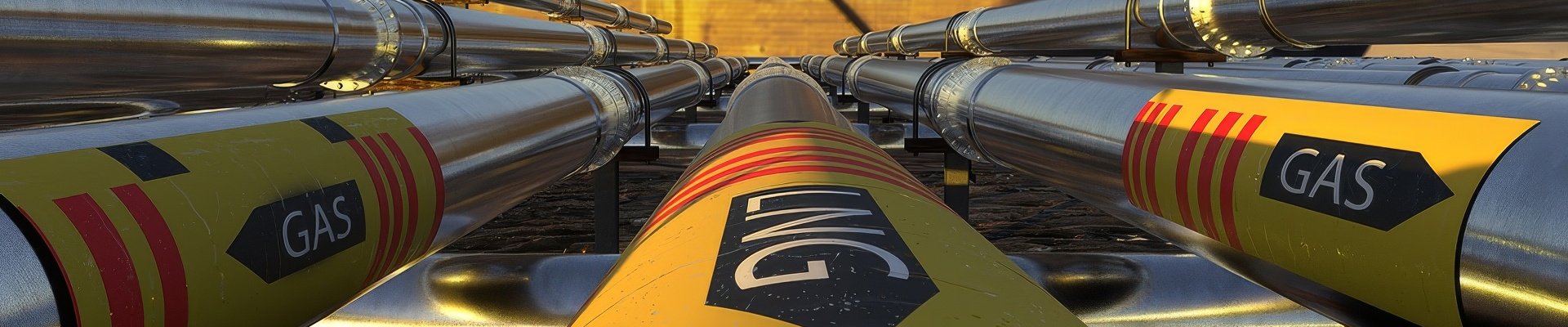
Natural gas - in compressed (CNG) or liquefied (LNG) form - is widely used for electricity generation and thermal energy production, offering flexible, dispatchable power that complements variable renewable sources. In the context of electrification, natural gas functions primarily as a transitional or “bridge” fuel, supporting grid reliability, peak demand management, and legacy energy systems as solar, wind, storage, and electrified processes scale. Its role is increasingly shaped by efficiency improvements, emissions constraints, and integration with hybrid energy architectures rather than long-term expansion.
When paired with Combined Heat and Power (CHP), natural gas systems can reach much higher efficiency by capturing and reusing heat that would otherwise be wasted.
This makes them ideal for facilities transitioning to renewables; sites needing reliable, dispatchable power; microgrids and critical infrastructure.
Natural Gas as a Bridge Fuel
- Lower CO2 emissions than coal or oil.
- High reliability and fast-start capability.
- Existing fuel delivery infrastructure.
- Compatible with biogas or hydrogen blends in the future.
Forms & Delivery
- Pipeline Gas (NG) - Delivered via natural gas pipelines at distribution pressure. Large stationary plants.
- Compressed Natural Gas (CNG) - Gas compressed to ~3,000-3,600 psi; transported in cylinders or tube trailers. Mobile gensets, off-pipeline locations.
- Liquefied Natural Gas (LNG) - Gas cooled to -162°C to become liquid; high energy density. Remote/off-grid high-demand sites, maritime.
Mobile Generator Sets
Containerized generator sets (gensets) with a gas engine fueled by CNG or LNG tanks, mounted on trailers or skids, that can be rapidly deployed. Gensets are hooked up to a site via temporary cables into the facility electrical switchboard.
- Temporary power for new facility construction.
- Bridge generation while renewable/microgrid assets are built.
- Emergency/disaster recovery power.
Combined Heat and Power (CHP)
A generation system that produces electricity and usable heat from the same fuel input. How it works:
- Primary mover - Gas turbine, gas engine, or steam turbine burns natural gas.
- Electric generation - Shaft power drives an alternator.
- Heat recovery - Waste heat from exhaust gases or engine cooling is captured in a heat recovery steam generator (HRSG) or heat exchanger.
- Thermal use - The recovered heat is piped to industrial process heating, absorption chillers for cooling, or district heating networks.
Efficiency & Transition Potential
- Conventional gas plant: ~35-50% efficient (electricity only).
- CHP plant: 65-80% efficient (electric + heat combined).
- Can be adapted over time to run on biogas or green hydrogen blends.