ElectronsX > Vehicles > Autonomous Machines > Autonomous Robotaxi Fleets
Autonomous Robotaxi Fleets
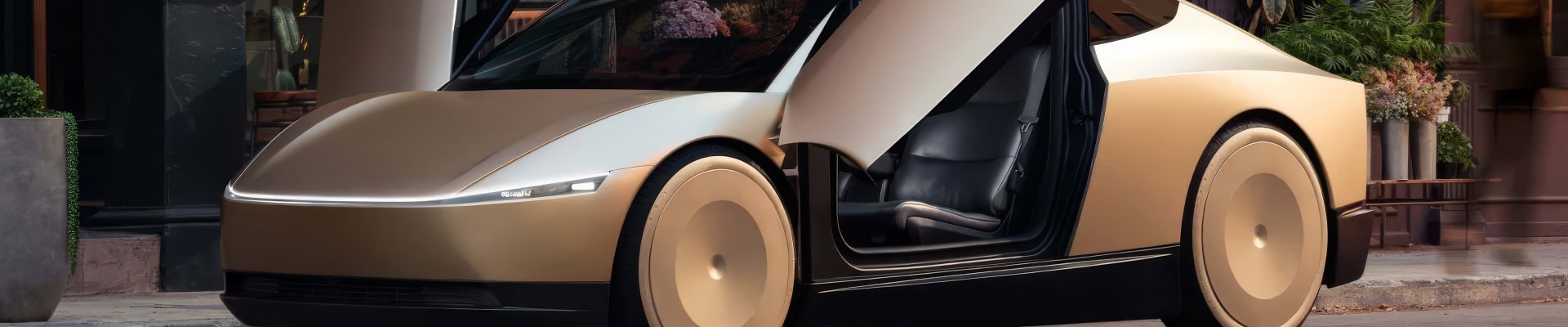
Robotaxis are autonomous, electric vehicles designed to replace human-driven ridesharing (Uber, Lyft, taxis). Unlike private cars, robotaxis are optimized for shared mobility, operating in urban environments with Level 4/5 autonomy stacks. They are centrally managed and optimized for high utilization, cost efficiency, and passenger convenience
Robotaxis represent the convergence of EVs, autonomy, and mobility-as-a-service (MaaS). General-purpose EVs with FSD (Tesla FSD, Waymo) are scaling faster, but purpose-built robotaxis (Tesla Cybercab, Baidu) will dominate in the long term with safer, more efficient, and higher-occupancy designs. They represent one of the most visible and disruptive use cases of autonomy, with deployments expanding in U.S. cities, China, and select international testbeds.
Key Use Cases
- Ridesharing / Urban Transit: Replacement for Uber/Lyft, last-mile transport.
- Campus & Municipal Shuttles: University, airport, and downtown loops.
- Logistics & Delivery Variants: Cargo-focused AVs for package delivery.
Robotaxi List
Robotaxi vehicles can be one of three classes: purpose-built autonomous vehicle with no steering wheel or pedals; autonomy-capable vehicles that have integrated sensors and autonomy tech that can be updated via OTA software for robotaxi role/operations; and, host vehicles with a suffiently advanced platform than can accept sensors and autonomy tech retrofitted after production.
| Brand model | Class |
|---|
Robotaxi Hardware & AI Stack
| Layer | Examples | Primary Role |
|---|---|---|
| Powertrain | EV platforms with 50-100 kWh packs, optimized for ~150-250 miles/day | Provide urban range, high utilization, optimized duty cycles |
| Sensors | Camera + radar (Tesla FSD); camera + LiDAR + radar (Waymo, Zoox) | Redundant sensing for safety-critical perception |
| Compute Stack | Tesla FSD chip, NVIDIA Orin/Thor, Qualcomm Snapdragon Ride, custom AV silicon | Real-time inference, sensor fusion, AV decision-making |
| Networking Stack | 5G/LTE V2X, Wi-Fi 6/6E, CAN, EtherCAT, private 5G networks, Ethernet docked | Fleet communication, high-speed internal bus, OTA updates |
| Memory & Storage | RAM 16-64 GB (LPDDR5), SSD 256 GB-2 TB, edge caches for LLMs/policies | Buffer sensor data, store OS/control SW, offline operation of AI models |
| Storage & Telemetry | Local SSD buffering, cloud upload of critical telemetry | Fleet-wide training feedback loop, safety event logging |
| LLMs & Agents | Cloud-linked LLMs (GPT, Grok, proprietary), multimodal reasoning, in-cabin copilots | Natural passenger interaction, task planning, clarifications, CV+NLP fusion |
| Fleet AI & Management | Centralized dispatch, energy/charging optimization, OTA software delivery | Optimize routing, maximize utilization, manage fleet-wide autonomy updates |
| Simulation & Digital Twin | Applied Intuition, Cognata, city-scale twins | Validation, training edge cases, regulatory safety reporting |
Market Outlook & Adoption
Robotaxi adoption is accelerating in China (Baidu, Pony.ai, AutoX) and select U.S. cities (Waymo in Phoenix/SF, Tesla in Phoenix/Houston/Austin). Scaling will depend on AI safety validation, regulatory approvals, and public trust.
| Rank | Adoption Factor | Drivers | Constraints |
|---|---|---|---|
| 1 | Urban Ride-Hailing Replacement | Labor cost savings, 24/7 operation, MaaS shift | Regulatory approval, safety validation, insurance/liability |
| 2 | Airport & Transit Integration | Predictable routes, captive ridership | Infrastructure readiness, airport security layers |
| 3 | Corporate & Campus Fleets | Controlled environments, sustainability goals | Scaling beyond campuses, mixed-traffic complexity |
| 4 | Luxury & Premium Mobility | HNWI demand, urban congestion fees avoidance | Low volume niche, regulatory overhead still applies |
Related Coverage
- Autonomous Cars (Personally Owned AVs)
- Robotrucks, Robovans & Robobuses
- Autonomous Agriculture
- Autonomous Construction Equip
- Autonomous Mining Equip
- Autonomous Maritime Vessels
- Autonomous Aviation
- Autonomous Lawnmowers