Energy Systems > Wind Power Systems
Wind Power Systems
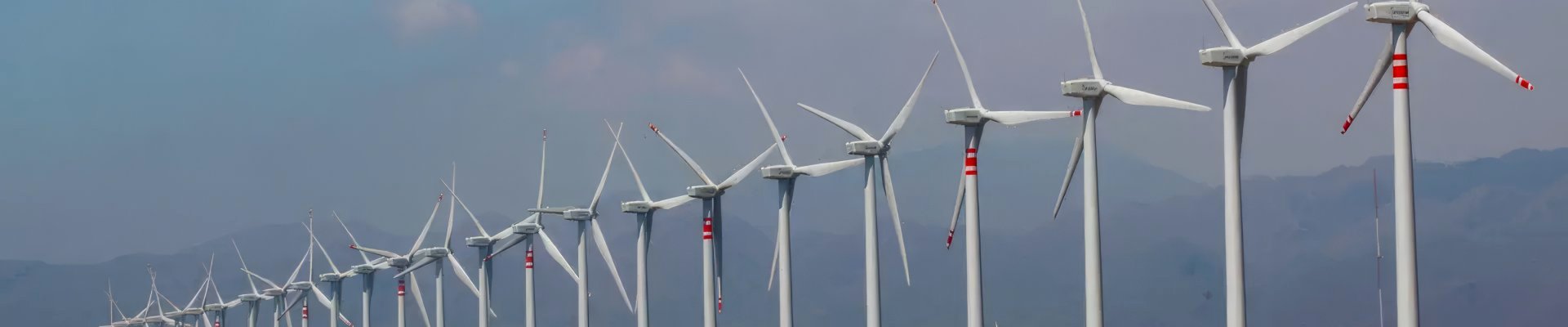
Wind power systems generate electricity by converting kinetic energy from wind into electrical power through turbine-driven generators. In electrification contexts, wind is primarily deployed at utility scale and, in select cases, as onsite or campus-scale generation to supply electrically driven infrastructure, industrial operations, and energy-intensive facilities. Unlike solar, wind power is highly site-dependent and is typically integrated into broader grid and energy system planning rather than deployed as a standalone onsite solution.
Role of wind power in electrification
Wind power contributes to electrification by supplying large volumes of low-marginal-cost electricity to the grid, supporting the growing electrical demand from vehicles, industry, data centers, and other electrified systems.
Key points
- Wind is best suited for bulk electricity generation
- Most electrification impact occurs through grid supply, not behind-the-meter use
- Wind complements solar by producing power at different times and seasons
- High-capacity wind resources reduce pressure on transmission-constrained regions
Wind power vs solar power systems
As with solar power systems, wind power system suffers from intermittency and variability. While both wind and solar generate renewable electricity, their deployment characteristics differ significantly.
Wind is like civil engineering: bespoke, location-specific, grid-centric, and constrained by physical scale and material inputs. Wind power won't vanish, but its role will evolve toward gap-filling, utility-scale, coastal energy supply, and diversification rather than being the dominant growth engine like solar.
Solar power, by contrast, is the "digital tech" of renewables — modular, mass-manufactured, and on a predictable cost-down path. PV cells benefit from global semiconductor/manufacturing economies of scale, few moving parts, quickly deployed, and cheaply maintained. Solar is widely deployable, has strong onsite use, and a predictable diurnal profile.
Solar scales easily behind the meter, while wind scales most efficiently at utility scale. This distinction explains why solar is treated as a primary onsite electrification enabler, while wind is treated as a grid-scale contributor.
Utility-scale wind farms
The majority of wind power deployment occurs through utility-scale wind farms, which are designed to deliver electricity directly into transmission and distribution networks. The total wind power capacity in the U.S. in 2025 is about 140 GW, with projected growth to 300 GW by 2030. This represents about 12% of total capacity today, and up to 20% of total capacity by 2030.
The following lists all wind farms and wind power projects 200 MW and greater in capacity by state in the U.S. The top 3 wind-power producing states are Texas, Iowa, and Oklahoma.
Onsite and distributed wind systems
Onsite wind power systems exist but are far less common than solar due to siting, zoning, and variability constraints.
Typical use cases
- Industrial campuses with consistent wind resources
- Rural facilities with sufficient land and setback distances
- Hybrid energy systems paired with solar and storage
Constraints
- Highly site-specific wind conditions
- Visual, noise, and permitting considerations
- More complex interconnection requirements
Integration with energy systems
Wind power systems rarely operate in isolation and are typically integrated into broader energy architectures.
- Transmission and substation infrastructure.
- Energy storage for smoothing and capacity firming.
- Grid management and forecasting systems.
- Regional balancing with solar, hydro, and conventional generation.