ElectronsX > Vehicles > Electric Marine
Electric Marine & Maritime
Maritime electrification follows a parallel but distinct path from land vehicles. The same battery, power electronics, and motor supply chains that serve EVs are being deployed on water — but marine environments introduce corrosion resistance requirements, waterproofing standards, fire suppression in enclosed hulls, and energy density challenges that scale non-linearly with vessel size. A 30-foot electric boat is straightforward. A 400-meter container ship is a 2040+ problem.
The market divides cleanly by vessel size and duty cycle. Recreational craft and small ferries are commercially mature — Candela hydrofoil ferries are operating in Stockholm, Stena is running battery-hybrid ferries in Scandinavia, and electric personal watercraft are a mainstream consumer product. Large commercial shipping is in the hybrid and alternative fuel transition phase, driven primarily by IMO GHG Strategy mandates rather than economic pull. Shore power (cold ironing) is the near-term decarbonization lever for commercial shipping at port — enabling ships to shut down diesel auxiliary engines and connect to grid power while berthed.
Marine Segment Taxonomy
| Category | Segments | Electrification Status | Primary Driver |
|---|---|---|---|
| Recreational Watercraft | Electric boats, yachts, personal watercraft, e-foils, catamarans | Commercial - strong consumer adoption; luxury and performance segments leading | Consumer demand, noise/emission reduction, operating cost |
| Ferries & Passenger Vessels | Urban water taxis, commuter ferries, car ferries, tourist ferries | Leading commercial adoption - predictable routes, overnight charging at terminals | Urban emission mandates, route economics, regulatory push |
| Workboats & Port Vessels | Harbor tugs, pilot boats, offshore service vessels, patrol craft | Early commercial - short duty cycles at port; emission-free harbor operations | Port emission zones, noise reduction, operational savings |
| Short-Sea Shipping | Coastal container feeders, ro-ro ferries, regional bulk carriers | Battery-hybrid emerging; all-electric on shortest corridors | IMO CII ratings, EU ETS (maritime), port emission fees |
| Deep-Sea Commercial Shipping | Container ships, bulk carriers, tankers, cruise ships | Hybrid/alternative fuel transition; battery for port hoteling power; LNG, methanol, ammonia as bridge fuels | IMO GHG Strategy 2050, EU ETS, CII annual ratings, ESG pressure |
| Autonomous Maritime | Autonomous surface vessels (ASVs), unmanned underwater vehicles (UUVs), autonomous tugs | Pilots - Yara Birkeland (autonomous container ship Norway), autonomous port tugs | Labor cost, safety, remote operations capability |
Recreational Watercraft
Electric recreational craft lead marine adoption thanks to smaller size, shorter duty cycles, and strong consumer and luxury market pull. The noise reduction advantage is particularly compelling on lakes and in marine reserves where noise pollution affects wildlife and tourism quality. Key OEMs and platforms:
Candela (SE) - hydrofoil electric speedboats and ferries; C-8 foiling boat (30 knots, 50-mile range on foils); P-12 hydrofoil ferry operating in Stockholm (world's first commercial hydrofoil electric ferry); the foil architecture dramatically reduces drag and extends battery range vs. conventional hull
X Shore (SE) - premium electric boats; Eelex series; Scandinavian design focus; 40-knot top speed; strong European luxury market
Torqeedo (DE / Dometic) - largest electric marine motor brand globally; Deep Blue 100 system; outboard and inboard electric motors from 1 kW to 100 kW; acquired by Dometic 2022
Evoy (NO) - high-performance electric outboard motors; 150-300 HP range; targeting performance boat segment
Flux Marine (US) - outboard electric motors; US market focus; Range up to 35 miles
Duffy Electric Boats (US) - electric pontoon and leisure boats; long-established US recreational electric boat brand
Frauscher (AT) - luxury electric day boats; 740 Mirage Air electric model; premium Austrian boat builder
Foil / Personal Watercraft: Fliteboard (AU), Lift Foils (US), Radinn (SE) — battery-electric hydrofoil boards and personal watercraft; fastest-growing micro-segment
Ferries - The Leading Commercial Segment
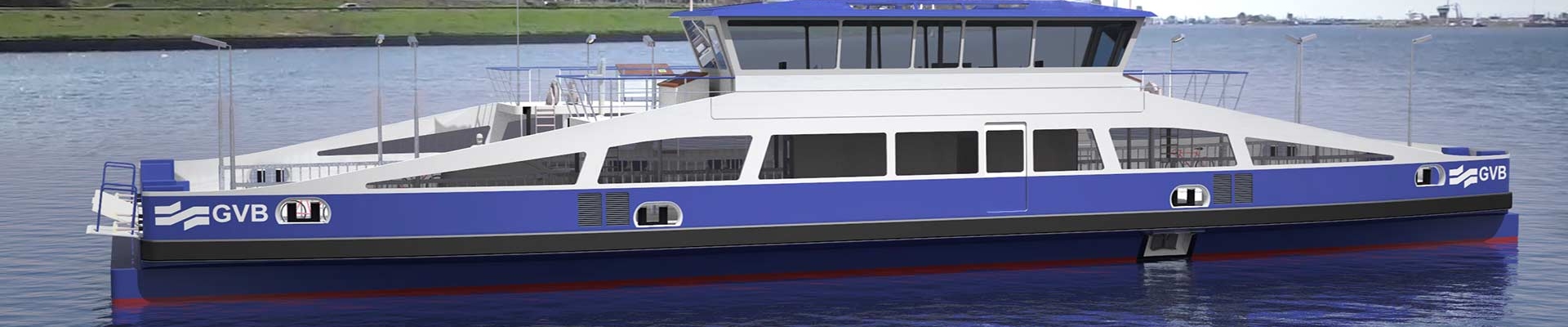
Electric ferries are the most commercially advanced large vessel electrification segment. Ferries operate on fixed routes with predictable energy consumption and return to terminal daily — enabling overnight or between-sailing charging, exactly the pattern that makes EV fleets work. Norway leads globally with over 70 battery-electric or hybrid-electric ferries in operation, driven by NOx tax incentives and fjord emission zone regulations.
Norled / Ampere (NO) - MF Ampere, world's first fully battery-electric car ferry (launched 2015, Sognefjord Norway); operated by Norled; established the commercial template
Stena Line (SE) - Stena Elektra program; hybrid ferries on Gothenburg-Frederikshavn route; targeting zero-emission Baltic Sea operations
Color Line (NO) - Color Hybrid, world's largest plug-in hybrid passenger/car ferry at launch; 26 MWh battery; Sandefjord-Strömstad route
BC Ferries (CA) - Hybrid-electric Island Class ferries; LNG and battery hybrid; Pacific Northwest short routes
Washington State Ferries (US) - Olympic Class hybrid-electric ferries; Puget Sound routes; largest ferry system in US
Candela P-12 (SE) - hydrofoil electric ferry; 30 passengers; 25-knot cruising speed; Stockholm archipelago; fastest electric ferry in commercial service
Brittany Ferries / DFDS (EU) - hydrogen and battery hybrid programs for English Channel routes
Commercial Shipping & IMO Decarbonization
Commercial shipping accounts for approximately 3% of global CO2 emissions and is governed by the International Maritime Organization (IMO). The IMO's Revised GHG Strategy (adopted 2023) targets net-zero by 2050 and at least 40% GHG reduction by 2030 vs. 2008 baseline. The EU has brought shipping into its Emissions Trading System (ETS) from 2024, adding direct carbon cost to all EU port calls. These regulatory pressures are driving the commercial shipping transition — not cost economics, which strongly favor fossil fuels at current energy prices.
The near-term decarbonization tools for commercial shipping:
Shore power (cold ironing) - ships plug into grid electricity at berth and shut down diesel auxiliary engines; eliminates 100% of port-based emissions; EU regulation mandates shore power capability at major ports by 2030; the single most impactful near-term maritime electrification measure
Battery hybrid - batteries handle peak load and port maneuvering; main engines run on LNG or VLSFO for ocean passages; reduces fuel consumption 5-30% depending on route
LNG as bridge fuel - lower NOx and SOx vs. bunker fuel; lower CO2 per tonne-mile; CMA CGM, MSC, Carnival all ordering LNG vessels; does not achieve IMO 2050 targets alone
Methanol and ammonia - zero-carbon at point of combustion if green-produced; Maersk, Stena, and others ordering methanol-capable vessels; ammonia more energy-dense but toxic
Hydrogen fuel cell - zero emission; Yara Birkeland uses battery-electric not fuel cell; Coastal shipping pilots underway in Norway
Yara Birkeland (NO) - world's first autonomous zero-emission container ship; 120 TEU; battery-electric; operating Brevik-Larvik Norway route; Kongsberg autonomous navigation; reduced truck trips by estimated 40,000/year
Shore Power (Cold Ironing) & Port Electrification
Shore power is the connection of a berthed ship to shoreside electrical power, allowing main and auxiliary engines to be shut down during port stay. A cruise ship at berth can consume 10-30 MW of power from diesel generators — equivalent to a small town's electricity demand — solely for lighting, HVAC, refrigeration, and hotel services. Shore power eliminates this entirely.
Shore power installations require high-voltage shore connection (HVSC) equipment at the berth and compatible inlet systems on the vessel. The IEC/ISO/IEEE 80005-1 standard defines HVSC requirements. EU Alternative Fuels Infrastructure Regulation (AFIR) mandates shore power at TEN-T core network ports for container and passenger ships by 2030.
Leading shore power infrastructure: ABB Onshore Power Supply systems, Cavotec shore power solutions, Schneider Electric port energy management. Major port deployments: Port of Los Angeles, Port of Rotterdam, Port of Hamburg, Port of Gothenburg.
See: Seaport Electrification | Energy Autonomy Yards
Autonomous Maritime
Autonomous surface vessels (ASVs) are advancing in parallel with maritime electrification — electric drivetrains simplify autonomous integration by eliminating complex mechanical propulsion controls. Key platforms and programs:
Yara Birkeland (NO) - Kongsberg autonomous navigation; first autonomous zero-emission container ship in commercial operation on Norway coastal route
Rolls-Royce / Kongsberg - remote-operated and autonomous vessel programs; Svitzer Hermod first autonomous tug demonstration (Copenhagen Harbor)
Sea Hunter / DARPA (US) - autonomous military surface vessel; long-endurance ASW patrol; operational with US Navy
Mayflower Autonomous Ship (UK/IBM) - fully autonomous research vessel; transatlantic crossings; AI Captain system
Wingtech/CSSC (CN) - Chinese autonomous cargo ship programs; JARI autonomous 2,000-tonne bulk carrier
See: Autonomous Maritime Directory
Technology Stack
| System | Components | Marine-Specific Notes |
|---|---|---|
| Propulsion | Electric inboard motors, pod drives, outboard electric motors, azimuth thrusters | Pod drives (ABB Azipod, Rolls-Royce Mermaid) enable 360-degree thrust without rudder; advantage for maneuvering; corrosion-resistant marine-grade construction required |
| Energy Storage | LFP marine battery packs; NMC for high-energy-density applications; battery management system | Marine battery safety standards: IEC 62619, DNV-GL marine class; fire suppression (water mist, CO2) mandatory in enclosed battery compartments; IP67+ waterproofing |
| Power Electronics | Variable frequency drives (VFDs), DC-DC converters, inverters for AC propulsion motors | Marine-grade VFDs for large vessel propulsion; SiC emerging for high-power marine VFDs; same supply chain as industrial VFDs and EV traction inverters |
| Shore Power / Charging | HVSC (high-voltage shore connection) for commercial vessels; DC fast chargers for small craft; battery swap for select ferry operations | IEC/ISO/IEEE 80005-1 HVSC standard; ferry charging typically overnight or between sailings; 1-20 MW shore power for large passenger vessels |
| Alternative Fuels | LNG dual-fuel engines, methanol engines, hydrogen fuel cells, ammonia engines (emerging) | Bridge fuels for deep-sea routes beyond battery range; green methanol and green ammonia require renewable hydrogen upstream supply chain |
| Hydrofoil Systems | Active foil control systems, flight control computer, retractable foil assemblies | Candela C-8 and P-12 demonstrate 3-4x range extension from foiling vs. conventional hull at speed; foil drag reduction is the most impactful marine efficiency innovation of the decade |
Adoption Outlook 2026-2030
| Rank | Segment | Outlook | Key Driver | Constraint |
|---|---|---|---|---|
| 1 | Passenger Ferries | Very High - commercially proven | NOx/emission mandates; Norway model expanding globally; route economics | Ferry terminal charging infrastructure; battery weight on longer routes |
| 2 | Recreational Watercraft | High - strong consumer pull | Noise/emission-free zones; luxury market; operating cost | Marina charging infrastructure; range for offshore use |
| 3 | Shore Power / Cold Ironing | High - regulatory mandate | EU AFIR mandate by 2030; port emission zones; IMO GHG strategy | Port electrical infrastructure investment; vessel retrofit costs |
| 4 | Harbor Workboats & Tugs | Medium-High | Port emission zones; predictable duty cycles; low-noise harbor operations | High-duty-cycle power demand; limited charging windows |
| 5 | Short-Sea Shipping | Medium - battery-hybrid scaling | EU ETS carbon cost; CII ratings; fixed short corridors | Energy density for longer corridors; port charging investment |
| 6 | Deep-Sea Commercial | Long-term - alternative fuels transition | IMO 2050 net-zero mandate; EU ETS; ESG pressure on shipping companies | Energy density physics; green fuel availability and cost; fleet replacement timescales |
Related Coverage
Port & Infrastructure: Seaport Electrification | Energy Autonomy Yards | Charging Infrastructure
Supply Chain: Power Electronics SC - Marine VFDs | Battery Supply Chain
Autonomy: Autonomous Maritime | Autonomous Vehicles & Machines
Parent: Vehicles Hub