ElectronsX > Systems > EV Platforms > Stellantis EV Platforms
Stellantis EV Platforms
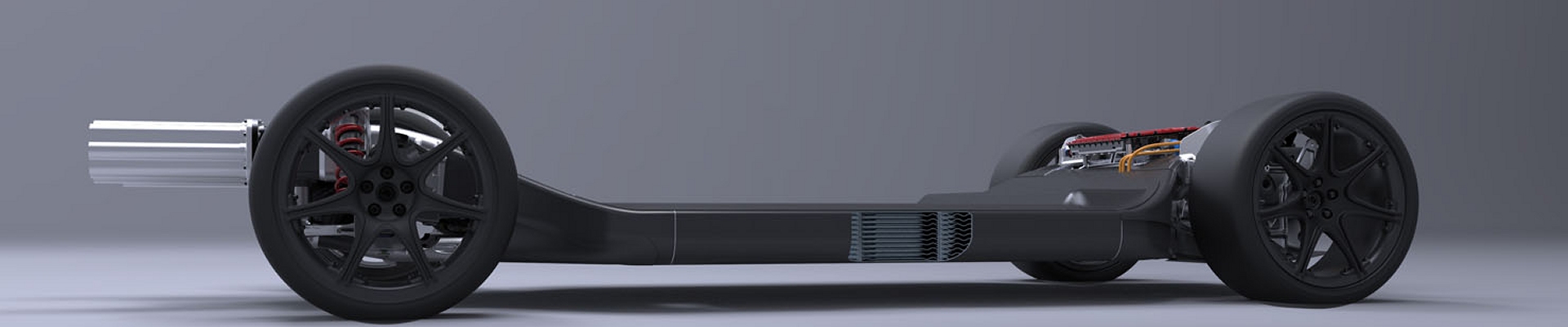
This article summarizes Stellantis' major EV platforms and why they matter. A platform is not just a chassis. It is a layered system that shapes real-world behavior: charging curve stability, sustained performance, thermal limits, software longevity, and autonomy headroom.
Stellantis operates many brands (Jeep, Ram, Dodge, Chrysler, Fiat, Peugeot, Citroën, Opel/Vauxhall, Alfa Romeo, Maserati, DS Automobiles, Lancia). Platform sharing is expected by design: STLA platforms define the underlying "skate", while brand execution differentiates styling, tuning, software features, interior design, and option strategy.
What a Stellantis platform controls
Stellantis platforms are best understood as a stack: a vehicle “skate” platform family plus a software-defined vehicle (SDV) layer that spans multiple brands.
- Structural and energy layer: pack layout, crash structure, suspension hard points, multi-body packaging
- Powertrain and charging layer: voltage class (400 V vs 800 V-class), fast-charge headroom, drive unit integration
- EEA (electrical/electronic architecture): controller consolidation, in-vehicle networking, OTA scope
- Software platform layer: Stellantis' SDV layers (STLA Brain, STLA SmartCockpit, STLA AutoDrive) intended to unify software across brands
Stellantis platform roadmap
Stellantis' EV platform roadmap can be summarized as:
- Legacy / current: e-CMP and other regional architectures used across compact programs
- STLA families (next-gen): STLA Small, Medium, Large, Frame as the core BEV platform set
- SDV overlay: STLA Brain / SmartCockpit / AutoDrive as cross-brand software architecture layers
Stellantis EV platform lineup
| Platform / Architecture | Primary Use | Voltage / Charging | Architecture Direction | Representative Examples |
|---|---|---|---|---|
| STLA Small | Smaller passenger EVs (compact segments) | 400 V-class (program dependent) | Next-gen small-vehicle BEV platform family for multiple Stellantis brands | Future compact BEVs across EU-focused brands |
| STLA Medium | Mainstream passenger EVs (C/D segments) | 400 V-class (program dependent) | Modular BEV platform for high-volume cross-brand use | Future Peugeot/Opel/Jeep/Fiat-class programs |
| STLA Large | Larger passenger EVs (performance + premium capable) | 400 V and 800 V-class capability is referenced in Stellantis messaging (program dependent) | Supports higher-performance and longer-range programs; intended for North America and global premium products | Dodge/Jeep/Chrysler/Alfa Romeo-class next-gen EVs |
| STLA Frame | Body-on-frame trucks and large SUVs | 400 V and 800 V-class capability is referenced (program dependent) | Truck/SUV platform family optimized for towing, payload, and durability | Ram/Jeep large SUV and truck BEV programs |
| e-CMP (legacy) | Compact cross-brand programs (legacy EV architecture) | 400 V-class (typical for segment) | Earlier multi-energy architecture used across multiple European brands | Prior generation compact EVs across Peugeot/Opel/Citroën/Fiat lines |
| STLA Brain / SmartCockpit / AutoDrive | Cross-brand SDV software stack | Enables broader OTA capability (not a voltage spec) | Unifies software and compute architecture across platforms and brands | Roadmap layer intended to span STLA Small/Medium/Large/Frame |
STLA Small / Medium
STLA Small and STLA Medium are the volume platforms intended to replace a patchwork of regional legacy architectures. Their main value is industrial: shared modules, faster cadence, and more consistent electrical architecture behavior across brands.
What these tend to enable:
- Faster cross-brand rollout of EV programs using shared modules
- More consistent charging and thermal behavior generation-to-generation
- Clearer SDV upgrade path because the EEA and software layers can standardize
See the STLA Small and STLA Medium platform pages.
STLA Large
STLA Large targets higher performance and longer-range programs and is positioned as a global platform for premium and performance-oriented products. Public Stellantis messaging references both 400 V and 800 V-class capability across STLA platforms, with the exact implementation varying by model program.
What STLA Large tends to focus on:
- Higher power and thermal headroom for sustained performance
- Potential for higher-voltage charging configurations on select programs
- Platform commonality across multiple North America and global brands
See the STLA Large platform page.
STLA Frame
STLA Frame is the truck-and-large-SUV platform family designed for towing, payload, and durability. It matters because those use cases stress thermal systems, high-power draw, and charging behavior more than typical passenger duty cycles.
What STLA Frame tends to enable:
- Chassis and suspension hardpoints optimized for heavy loads
- Battery sizing and cooling strategies aligned to towing and high-duty cycles
- Architecture consistency across truck/SUV programs for fleets
See the STLA Frame platform page.
STLA Brain / SmartCockpit / AutoDrive (SDV layer)
Stellantis presents STLA Brain (core compute/EEA layer), STLA SmartCockpit (cabin UX), and STLA AutoDrive (ADAS/automation features) as a cross-brand SDV stack. This matters because it can decouple software capability from any single vehicle platform and allow consistent OTA behavior across brands and segments.
See the Stellantis SDV stack.
Related Coverage
- E-GMP Platform
- Ford EV Platforms
- NIO EV Platforms
- SAIC Motor EV Platforms
- XPENG EV Platforms
- Tesla EV Platforms
- Hyundai Motor EV Platforms
- General Motors EV Platforms