ElectronsX > Systems > EV Platforms > E-GMP Platform
E-GMP Platform
E-GMP (Electric-Global Modular Platform) is Hyundai Motor Group's dedicated battery-electric passenger vehicle platform family. It is best understood as a layered system (structure + high-voltage + thermal + electrical/software) that shapes real-world behavior: charging curve stability, sustained performance, cabin packaging, and long-term software headroom.
Platform Identity
| Field | Value |
|---|---|
| OEM | Hyundai Motor Group (Hyundai, Kia, Genesis) |
| Platform name | E-GMP (Electric-Global Modular Platform) |
| Status | Current (with a next-generation successor planned over time) |
| First deployment year | 2021 model-year vehicles (platform unveiled late 2020) |
Architectural Core
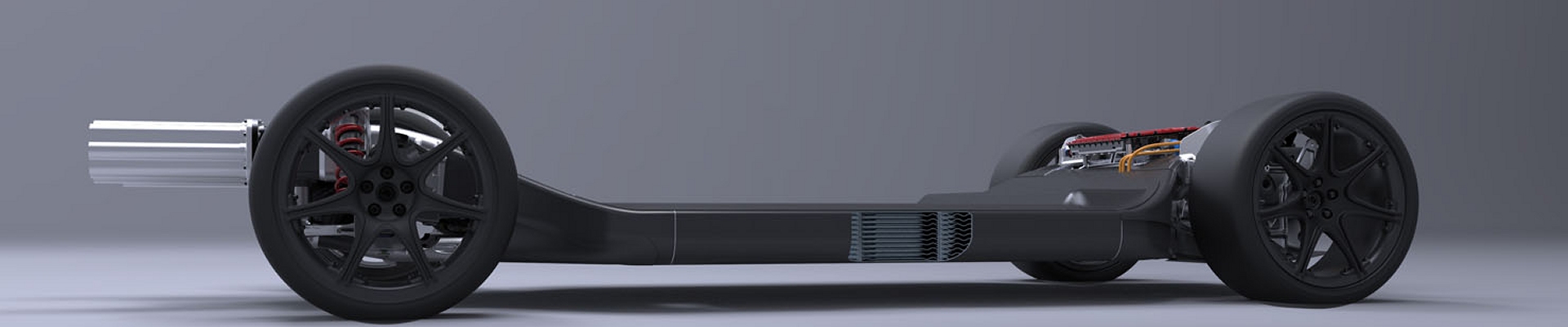
E-GMP is commonly described as an EV "skateboard" style platform: the battery pack is integrated low in the floor, with modular wheelbase and standardized mounting strategies that scale across multiple body styles.
- Voltage architecture: 800 V-class charging architecture with 400 V charging compatibility
- Battery integration philosophy: floor-integrated pack for low center of gravity and packaging efficiency
- Structural layout: skateboard-style base with scalable wheelbase and shared hard points
Electrical & SDV Architecture
Like many current-generation EV platforms, E-GMP spans a transitional era: the architecture supports modern software capabilities and higher controller consolidation, but it is not a "pure zonal-from-day-one" design across every model. The implementation varies by vehicle program and model year.
- ECU consolidation direction: hybrid domain-based consolidation, with increasing centralization in infotainment and ADAS computing
- OTA scope: program dependent; generally includes infotainment and can extend into vehicle functions depending on model and region
- Compute topology: typically separate high-compute domains (infotainment and ADAS) with distributed body and chassis controllers
Charging & Energy Behavior
E-GMP is widely associated with strong fast-charging capability in the 800 V class, and with 400 V compatibility achieved through on-vehicle power conversion (rather than requiring external adapters or a separate charge-path architecture). In practice, the platform's advantage shows up as more repeatable charging performance and better thermal stability at higher charge rates.
- Peak vs sustained charging: peak numbers matter less than how long the vehicle can hold a high charge rate (curve stability)
- Thermal strategy: integrated battery and drive-unit thermal management designed for repeated fast-charge use
- AC/DC characteristics: AC onboard charging is program dependent; DC fast charging is a core platform strength
Autonomy & ADAS Readiness
E-GMP provides a modern baseline for advanced driver assistance systems (ADAS), but autonomy readiness is ultimately determined by the vehicle's sensor set, compute platform, redundancy strategy, and software stack. The platform can support meaningful scaling, but it does not guarantee it.
- Designed autonomy ceiling: not a single fixed level; varies by program and sensor/compute configuration
- Sensor/compute scaling: supports ADAS compute upgrades across model refresh cycles more easily than legacy ICE platforms
Vehicle Coverage
E-GMP underpins multiple Hyundai Motor Group BEVs. Rather than listing every permutation, model coverage is best handled on portfolio pages and canonical model pages.
- Representative examples: Hyundai IONIQ 5, Hyundai IONIQ 6, Kia EV6, Genesis GV60
- Vehicle classes supported: passenger cars and crossovers (and derivatives), with scalability across segments
What This Platform Enables (and What It Limits)
E-GMP is a platform optimized for modern BEV packaging and high fast-charge performance. The trade-offs are mostly about where the industry is in the SDV transition: not every implementation is fully zonal, and software capability varies by model year, region, and brand execution.
- Enables: 800 V-class charging behavior, strong DC fast-charge repeatability, efficient interior packaging, and scalable motor layouts (RWD/AWD)
- Limits: SDV maturity is not uniform across all E-GMP vehicles; OTA scope and compute centralization vary by program
- Why it matters: the platform influences charging curve stability and thermal headroom more than many isolated spec sheet values
Related Coverage
- EV Platform & Architecture
- Ford EV Platforms
- NIO EV Platforms
- SAIC Motor EV Platforms
- Stellantis EV Platforms
- XPENG EV Platforms
- Tesla EV Platforms
- Hyundai Motor EV Platforms