ElectronsX > Systems > EV Platforms > Hyundai Motor EV Platforms
Hyundai Motor EV Platforms
This article discusses the Hyundai Motor Group major EV platforms and why they matter. A platform is not just a chassis. It is a layered system that shapes real-world behavior: charging curve stability, sustained performance, thermal limits, software longevity, and autonomy headroom.
What an EV platform controls
A modern electric vehicle platform is best understood as four tightly coupled layers. These layers determine how the vehicle behaves more than most isolated specs.
- Structural and energy layer: pack layout, crash structure, suspension hard points
- Electrical and compute architecture: centralized vs zonal design, in-vehicle networking, controller consolidation
- Thermal and power management: battery cooling, drive unit and inverter cooling, heat pump integration
- Software and OTA capability: vehicle OS direction, telemetry, OTA scope, ADAS and autonomy integration
Hyundai EV platform roadmap
Hyundai Motor Group’s EV platform roadmap can be summarized as:
- E-GMP: current dedicated passenger EV platform family
- IMA: next-generation architecture intended to replace E-GMP over time
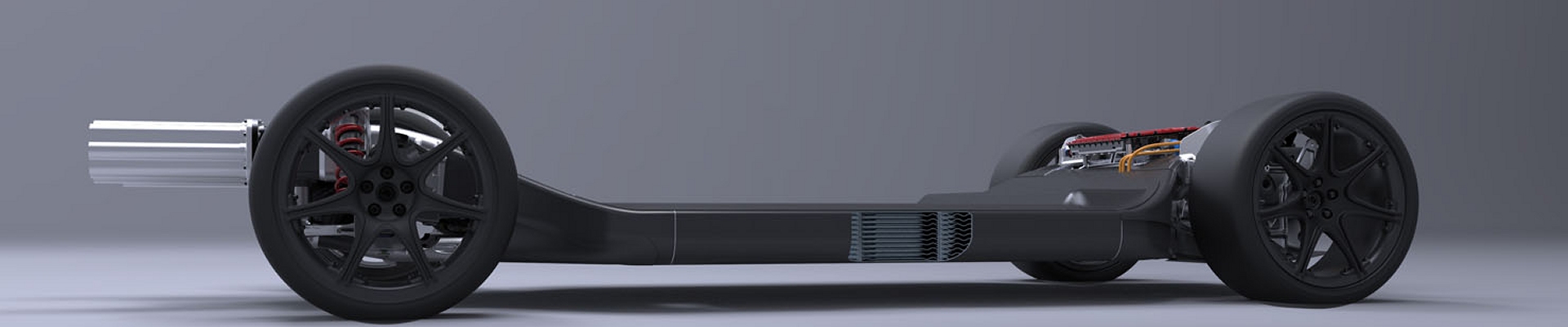
- PBV platforms: dedicated flat “skateboard” bases for purpose-built commercial vehicles
Platforms are shared across Hyundai, Kia, Genesis brands.
Hyundai EV platform lineup
| Platform | Primary Use | Voltage / Charging | Architecture Direction | Representative Examples |
|---|---|---|---|---|
| E-GMP | Passenger EVs (Hyundai, Kia, Genesis) | 800 V-class fast charging with 400 V compatibility | Gen-1 dedicated EV platform; designed to scale across body types | IONIQ 5, IONIQ 6, EV6, GV60 |
| IMA | Next-gen passenger EVs and SDV-aligned vehicles | TBD (public specs vary by future vehicle) | SDV-first direction; higher modularization and standardization | Future Hyundai, Kia, Genesis EV generations |
| E-GMP.S | PBV skateboard concept applied to E-GMP family | TBD (program dependent) | Flat skateboard base to accept multiple upper bodies | PBV concepts and early PBV program vehicles |
| eS | Dedicated BEV PBV skateboard platform (commercial) | TBD (program dependent) | Purpose-built skateboard enabling modular bodies | Kia PBV program (PV-series) and related PBVs |
E-GMP (Electric-Global Modular Platform)
E-GMP is Hyundai Motor Group’s first dedicated passenger-EV platform family. It was designed for high fast-charging performance and for scaling across multiple vehicle segments.
What E-GMP tends to enable:
- Strong DC fast-charging capability (800 V-class charging behavior)
- Compatibility with mainstream 400 V DC fast chargers
- Flexible motor layouts (RWD and AWD variants)
- Flat-floor packaging and efficient cabin utilization
See the E-GMP platform.
IMA (Integrated Modular Architecture)
IMA is the next-generation platform architecture intended to replace E-GMP over time. The stated goal is deeper component modularization (batteries, motors, and common architecture elements) and a more software-defined vehicle (SDV) direction.
What IMA is expected to focus on:
- Higher standardization of core EV modules across many models
- Electrical architecture evolution toward SDV patterns (higher compute centralization, more consolidation)
- Improved lifecycle upgrade path through OTA and platform-level software capabilities
See the IMA platform.
PBV Platforms: E-GMP.S and eS
PBVs (Purpose-Built Vehicles) are commercial-first vehicles designed around a mission (delivery, service, shuttle, logistics). They prioritize modular bodies, rapid upfitting, and lifecycle fleet operations.
Why PBV platforms are different:
- Skateboard base supports multiple upper bodies without re-engineering the entire vehicle
- Designed around fleet uptime, serviceability, and configurable interiors
- More “system” thinking: vehicle + software + charging + operations
Hyundai Motor Group has discussed applying a skateboard concept as E-GMP.S, and Kia has described a dedicated PBV skateboard platform called eS for its PBV lineup.
See the PBV platform.
Related Coverage
- SAIC Motor EV Platforms
- Stellantis EV Platforms
- XPENG EV Platforms
- Tesla EV Platforms
- General Motors EV Platforms
- Volkswagen Group EV Platforms
- Geely EV Platform Families
- BYD EV Platform Families