ElectronsX > Systems > EV Platforms > BMW Group EV Platforms
BMW Group EV Platforms
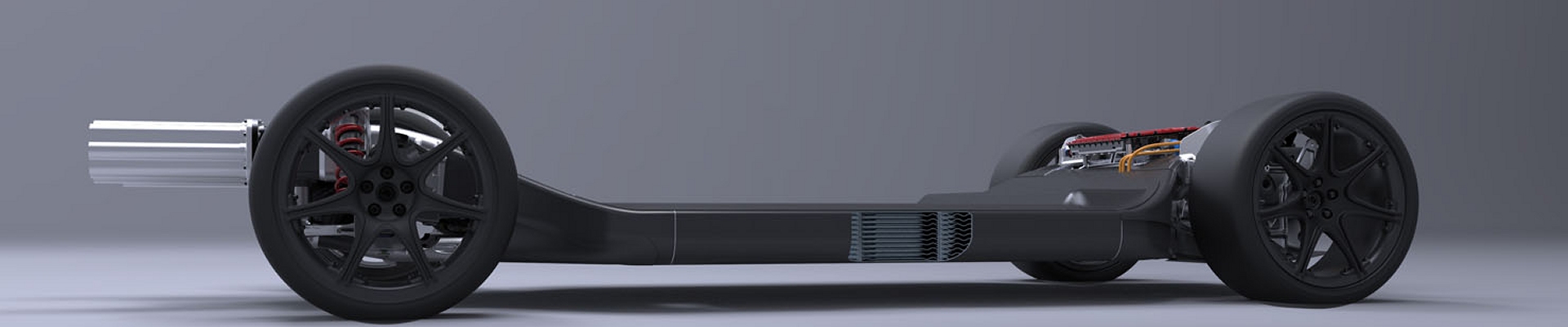
This article discusses BMW Group’s major EV platforms and architectures and why they matter. A platform is not just a chassis. It is a layered system that shapes real-world behavior: charging curve stability, sustained performance, thermal limits, software longevity, and autonomy headroom.
BMW Group includes multiple consumer brands that may share architecture components while maintaining distinct “brand execution.” BMW is the core brand, MINI is the compact/urban brand, and Rolls-Royce is ultra-luxury. Shared building blocks can include battery modules, e-drive generations, software stacks, and electrical-architecture patterns, even when the underlying body structures differ.
What an EV platform controls
A modern EV platform is best understood as four tightly coupled layers. These layers determine how the vehicle behaves more than most isolated specs.
- Structural and energy layer: pack layout, crash structure, suspension hard points
- Electrical and compute architecture: centralized vs zonal design, in-vehicle networking, controller consolidation
- Thermal and power management: battery cooling, drive unit and inverter cooling, heat pump integration
- Software and OTA capability: vehicle OS direction, telemetry, OTA scope, ADAS and autonomy integration
BMW Group EV platform roadmap
The architecture roadmap can be summarized as:
- Legacy / current multi-energy architectures: CLAR (BMW), plus MINI and Rolls-Royce architectures
- Next-gen dedicated EV: Neue Klasse (BMW Group next architecture direction for BMW core EVs)
- Commercial reality: multiple architectures can coexist for many years as programs phase in and out
BMW Group EV platform lineup
| Platform / Architecture | Primary Use | Voltage / Charging | Architecture Direction | Representative Examples |
|---|---|---|---|---|
| Neue Klasse | Next-generation BMW EVs (core brand), scalable across segments | TBD (program dependent; commonly positioned as higher-performance fast charging) | Dedicated EV-first architecture; designed around modular battery/e-drive generations and longer software lifecycle | Future BMW EV generations (post-launch programs) |
| CLAR (BMW Cluster Architecture) | BMW core vehicles using shared multi-energy architecture (ICE/HEV/BEV coexistence depending on program) | Typically 400 V-class for current BMW BEVs (model dependent) | Multi-powertrain architecture; widely used for current BMW EV lineup while next-gen ramps | i4, i5, i7, iX, iX3 (program dependent) |
| MINI EV architectures | MINI small EVs (architecture varies by generation and manufacturing program) | Typically 400 V-class (model dependent) | Compact-focused packaging; may include partner-sourced underpinnings on some generations | MINI Cooper Electric, MINI Aceman (program dependent) |
| Architecture of Luxury (Rolls-Royce) | Rolls-Royce ultra-luxury vehicles | TBD (model dependent) | Ultra-luxury structure optimized for refinement; EV integration is tuned around NVH and comfort targets | Rolls-Royce Spectre |
Neue Klasse (BMW next-generation architecture)
Neue Klasse is the dedicated EV-first architecture direction for BMW’s next vehicle generations. The intent is to improve system efficiency, reduce platform complexity versus multi-energy compromises, and increase software longevity through deeper standardization of core modules (battery, e-drive, and electrical architecture patterns).
What Neue Klasse is expected to focus on:
- More modular battery and e-drive building blocks across many models
- Better packaging efficiency and platform-level thermal integration
- Clearer platform foundation for long-term software feature lifecycle
See the Neue Klasse platform.
CLAR (BMW Cluster Architecture)
CLAR is BMW’s widely used architecture for current model generations. It is not “EV-only,” but it has enabled multiple BEV programs by adapting a shared structural and manufacturing approach. The tradeoff is that multi-energy architectures can be less packaging-optimal than clean-sheet EV-first platforms, especially as EV volumes rise.
What CLAR-based EV programs tend to enable:
- Faster EV model rollout using shared industrialization and body families
- Consistent BMW driving-dynamics tuning across EV and non-EV programs
- Incremental improvements in charging, thermal management, and software over model refresh cycles
See the CLAR architecture.
MINI EV architectures
MINI EVs emphasize compact packaging and urban usability. Depending on generation, MINI EVs can share group components (battery modules, software, infotainment patterns) while using distinct small-vehicle structures and manufacturing strategies versus BMW’s larger CLAR programs.
What MINI EV architectures tend to emphasize:
- Compact footprint with efficient interior packaging
- City-focused duty cycles and right-sized battery choices
- Brand execution focus: design, handling feel, and UX
See the MINI EV platforms.
Architecture of Luxury (Rolls-Royce)
Rolls-Royce uses an ultra-luxury architecture focused on refinement, quietness, and ride quality. EV integration on this type of platform is typically tuned around NVH (Noise, Vibration, Harshness) suppression, smooth torque delivery, and high-end comfort systems.
What ultra-luxury EV architectures tend to prioritize:
- Ride isolation and acoustic refinement
- Thermal management that preserves comfort in all climates
- Power delivery tuned for smoothness over outright “spec sheet” metrics
See the Rolls-Royce EV platform approach.
Related Coverage
- Tesla EV Platforms
- Hyundai Motor EV Platforms
- General Motors EV Platforms
- Volkswagen Group EV Platforms
- Geely EV Platform Families
- BYD EV Platform Families
- Rivian EV Platforms
- Mercedes-Benz EV Platforms