ElectronsX > Systems > EV Platforms > Ford EV Platforms
Ford EV Platforms
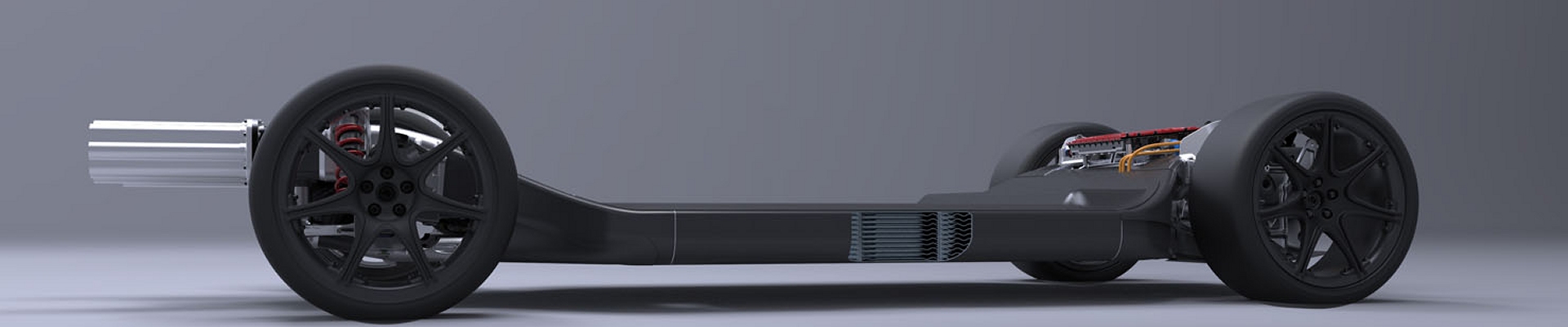
This article summarizes Ford's major EV platforms and platform directions and why they matter. A platform is not just a chassis. It is a layered system that shapes real-world behavior: charging curve stability, sustained performance, thermal limits, software longevity, and autonomy headroom.
What a Ford platform controls
Ford's EV platform story spans both dedicated EV platforms and EV adaptations of legacy architectures. The distinction matters: dedicated EV platforms typically deliver better packaging efficiency and electrical/thermal integration.
- Structural and energy layer: pack placement, crash structure, suspension hard points, cabin/cargo packaging
- High-voltage and charging layer: voltage class, fast-charge stability, thermal management integration
- EEA (electrical/electronic architecture): controller consolidation, in-vehicle networking, service diagnostics
- Software + OTA capability: update scope and long-term feature evolution
Ford platform roadmap
Ford's EV platform roadmap can be summarized as:
- GE1: dedicated-ish crossover EV platform used for Mustang Mach-E
- Commercial EV architectures: fleet-first van programs (E-Transit family)
- Next-gen EV platforms: next-generation, cost-reduced and higher-volume EV platform programs (including the next-gen truck program often referenced as T3)
Ford EV platform lineup
| Platform / Architecture | Primary Use | Voltage / Charging | Architecture Direction | Representative Examples |
|---|---|---|---|---|
| GE1 | Passenger crossover EV | 400 V-class (program typical) | Dedicated-ish EV platform focused on crossover packaging | Mustang Mach-E |
| E-Transit architecture | Commercial van (fleet-first) | Program typical 400 V-class; charging behavior varies by configuration | Commercial durability and serviceability; mission-focused configurations | E-Transit |
| Next-gen EV truck platform direction (T3 program) | Future full-size trucks (next-gen) | TBD (program dependent) | Next-gen manufacturing and SDV-oriented integration; cost and scale focus | Future Ford electric truck generation |
GE1 (Mustang Mach-E platform)
GE1 is associated with Mustang Mach-E. In platform terms, what matters is the crossover-focused packaging and the integration quality of battery thermal management and charging behavior, which drive real-world fast-charging experience more than “peak kW” claims.
What GE1 tends to enable:
- Crossover EV packaging with strong cabin utility
- Predictable duty-cycle performance when thermal systems are well sized
- OTA updates that can improve features over time (scope varies by model year)
See the GE1 platform page.
Commercial architectures (E-Transit)
Commercial EV architectures prioritize uptime, service access, and predictable charging workflows. Compared to passenger platforms, the design center shifts toward lifecycle cost, maintenance cadence, and configuration variety.
What commercial-first architectures tend to emphasize:
- Fleet serviceability and parts commonality
- Multiple wheelbase/roof configurations without re-engineering the entire electrical stack
- Telematics integration and fleet management compatibility
See the E-Transit architecture page.
Related Coverage
- EV Platform & Architecture
- E-GMP Platform
- NIO EV Platforms
- SAIC Motor EV Platforms
- Stellantis EV Platforms
- XPENG EV Platforms
- Tesla EV Platforms
- Hyundai Motor EV Platforms