ElectronsX > Systems > EV Platforms > Geely EV Platform Families
Geely EV Platform Families
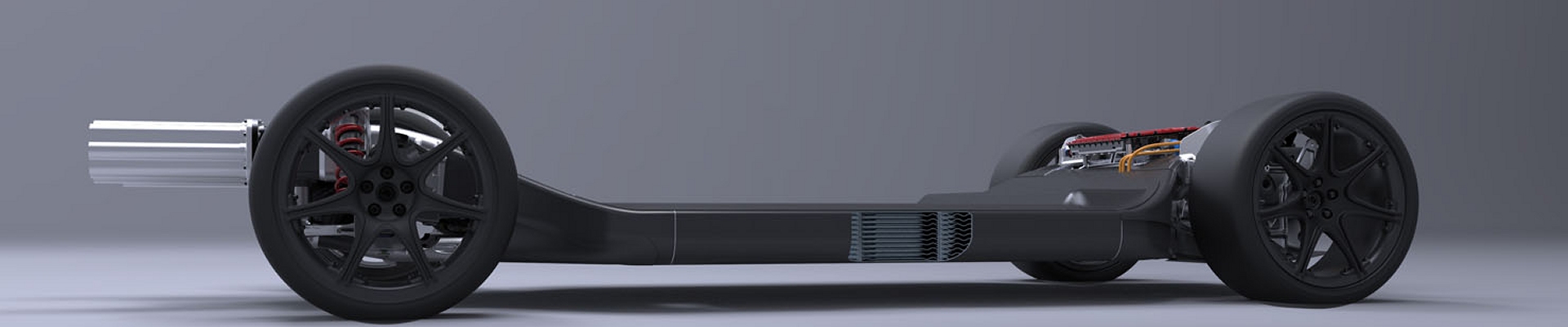
This article summarizes major EV platform families used across Geely Holding’s brand portfolio. A platform is not just a chassis. It is a layered system that shapes real-world behavior: charging curve stability, sustained performance, thermal limits, software longevity, and autonomy headroom.
Geely Holding operates a portfolio model: multiple brands share common platform families, then differentiate through software, tuning, packaging, and brand-specific design. This approach reduces cost and time-to-market while allowing distinct brand identities (for example, a shared EV architecture can appear under Zeekr, smart, Volvo, Polestar, or Lotus with different calibration and feature stacks).
Geely EV platform roadmap
A simplified roadmap across the group looks like this:
- CMA: earlier modular architecture used across multiple brands; supports electrified variants and some BEVs in the compact class
- SEA: group-wide modular BEV (battery-electric vehicle) architecture intended to scale from small to large vehicles
- SPA2: Volvo-led large BEV architecture used for premium SUVs/sedans and shared with Polestar
- GEA: Geely Auto’s newer “intelligent new energy” architecture used on selected Geely-branded programs
Geely EV platform lineup
| Platform | Primary Use | Voltage / Charging | Architecture Direction | Representative Examples |
|---|---|---|---|---|
| CMA | Compact vehicles across multiple brands; supports electrified powertrains and some BEVs | Program dependent | Earlier modular architecture jointly developed by Geely and Volvo | Volvo XC40 / C40 BEV; Polestar 2 |
| SEA | Group-wide modular BEV architecture; used across multiple brands and segments | Supports multiple variants; program dependent | “Open-source” modular BEV architecture designed to scale across segments | Zeekr models; smart #1; multiple Geely Holding BEVs |
| EPA | Lotus premium BEVs | Program dependent | Lotus customized architecture derived from SEA | Lotus Eletre; Lotus Emeya |
| SPA2 | Premium, large BEVs (Volvo and Polestar) | Program dependent | Dedicated BEV platform used for flagship models and OTA evolution | Polestar 3; Volvo EX90; Volvo ES90 (announced) |
| GEA | Geely-branded “intelligent new energy” vehicle programs | Program dependent | Newer Geely Auto architecture (brand-level roadmap component) | Geely “Starship” concept/flagship SUV (GEA-based) |
CMA (Compact Modular Architecture)
CMA is a modular architecture co-developed by Geely and Volvo and used widely across compact vehicles, including electrified variants. For the EV portfolio, CMA matters because several early “modern” BEVs and electrified derivatives share CMA underpinnings, even when they present as very different products.
See: CMA platform.
SEA (Sustainable Experience Architecture)
SEA is the group’s modular BEV architecture unveiled in 2020 and designed to scale across vehicle segments. Geely describes SEA as “open-source” and positions it as a foundation that can be reused across brands to accelerate BEV rollouts.
See: SEA platform.
EPA (Electric Premium Architecture)
EPA is a Lotus-customized EV architecture derived from SEA. It is used for Lotus’s premium electric models, where Lotus can tune chassis dynamics and brand experience while still leveraging group-level EV architecture investment.
See: EPA platform.
SPA2 (Scalable Product Architecture 2)
SPA2 is a Volvo-led BEV platform used for large premium EVs and shared with Polestar (for example, Polestar 3 lists SPA2 as its platform). This platform family is tied to a long-lived software and compute roadmap for safety, driver assistance, and battery management.
See: SPA2 platform.
GEA (Geely Electric Architecture)
GEA is a Geely Auto “intelligent new energy” architecture referenced in Geely Auto strategy communications and tied to Geely-branded programs. Treat this as a brand-level roadmap element, distinct from SEA, which is positioned as a broader group-wide BEV architecture.
See: GEA platform.
Notes for model pages
- Brand execution differs: shared platform does not imply identical vehicle behavior; tuning, thermal strategy, software stack, and options can materially change the experience.
- Platform naming varies by market: some sources use internal codes; prioritize OEM terms when available.
- Program-dependent specs: voltage class, peak DC charge rate, and compute stack are often vehicle-specific even when the underlying platform family is shared.
Related Coverage
- Tesla EV Platforms
- Hyundai Motor EV Platforms
- General Motors EV Platforms
- Volkswagen Group EV Platforms
- BYD EV Platform Families
- Rivian EV Platforms
- Mercedes-Benz EV Platforms
- BMW Group EV Platforms