EV Directory > Hyundai brand
Hyundai EV Models
Hyundai is an EV brand made in South Korea. This model lineup showcases the shift toward zero-emission mobility. Each model blends modern design, advanced battery systems, and efficient electric drivetrains engineered for performance and sustainability.
List of Hyundai major model variants - only all-electric (BEV) models are listed:
| EV Model | Style | Seating | MSRP * |
|---|---|---|---|
| Hyundai Inster | SUV | 5 | &euro21900 |
| Hyundai Inster | SUV | 5 | &euro24900 |
| Hyundai IONIQ 5 SR | SUV | 5 | $41800 |
| Hyundai IONIQ 5 LR | SUV | 5 | $45850 |
| Hyundai IONIQ 5 N | SUV | 5 | $67500 |
| Hyundai IONIQ 5 LR AWD | SUV | 5 | $47400 |
| Hyundai IONIQ 5 Robotaxi | SUV | 5 | |
| Hyundai IONIQ 6 SR | SUV | 5 | $42700 |
| Hyundai IONIQ 6 LR | SUV | 5 | $45500 |
| Hyundai IONIQ 6 LR AWD | SUV | 5 | $49000 |
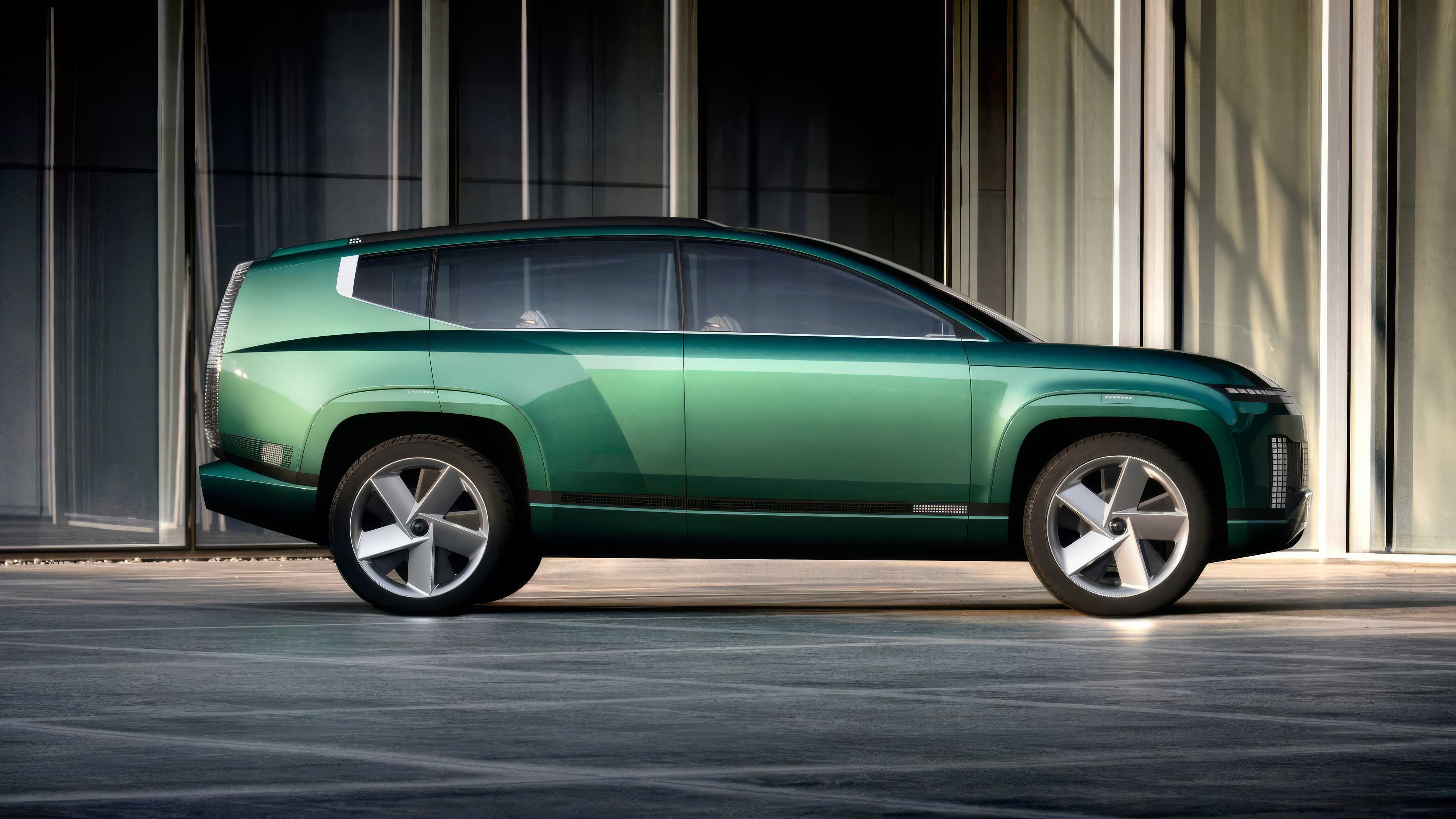
| Hyundai IONIQ 7 | SUV | 7 | |
| Hyundai IONIQ 9 | SUV | 7 | |
| Hyundai KONA Electric | SUV | 5 | $32875 |
| Hyundai KONA Electric LR | SUV | 5 | $37000 |
(Discontinued models are not listed.)
Key highlights across models
- 100% battery-electric powertrains
- Fast-charging capability (Level 3/DC)
- Regenerative braking for energy recovery
- Smart connectivity and over-the-air updates
- Advanced driver-assist and safety systems
- Designed for zero tailpipe emissions
* MSRP listed is approximate and can vary based on trim level, manufacturer incentives, country purchased in, and government taxes or credits applied. It is listed to give a ballpark figure upon which to compare with other models.
About the Hyundai brand
Hyundai Motor Company is a South Korean multinational automaker headquartered in Seoul and one of the world's largest automotive groups, operating alongside its affiliate Kia under the Hyundai Motor Group umbrella. Founded in 1967, Hyundai has evolved from a value driven manufacturer into a global technology leader known for innovation, quality, and design. Today, Hyundai is at the forefront of global electrification, developing a wide range of battery electric and hydrogen fuel cell vehicles supported by dedicated EV platforms and advanced digital ecosystems.
Hyundai's electrification strategy is centered on its IONIQ sub brand, which represents the company's fully electric vehicle lineup. The IONIQ 5, IONIQ 6, and upcoming IONIQ 7 are built on Hyundai's E-GMP (Electric Global Modular Platform), offering ultra fast 800 volt charging, vehicle to load (V2L) power export, and long range capability. The IONIQ 5 crossover has received global acclaim for its design, efficiency, and interior versatility, while the IONIQ 6 sedan emphasizes aerodynamics, low energy consumption, and digital connectedness. The three row IONIQ 7 SUV, launching soon, will expand Hyundai's electric reach into the family and premium utility market.
Beyond IONIQ, Hyundai continues to electrify its existing models through hybrid and plug in hybrid variants such as the Tucson, Santa Fe, and Kona. The Kona Electric remains one of Hyundai's best selling compact EVs globally, serving as an accessible bridge to the brand's dedicated electric lineup. In parallel, Hyundai is a pioneer in hydrogen fuel cell technology with vehicles such as the NEXO SUV and Xcient Fuel Cell commercial truck, positioning itself as one of the few automakers pursuing both battery and hydrogen powertrains at scale.
Hyundai's EV strategy is reinforced by major investments in U.S. and global manufacturing. The company's Hyundai Motor Group Metaplant America in Georgia is dedicated to EV and battery production for North America, while global expansion includes facilities in Indonesia and the Czech Republic. Hyundai also operates an extensive network of software, design, and robotics subsidiaries- including Boston Dynamics and Supernal (its advanced air mobility division)- as part of its long term "Smart Mobility Ecosystem" vision.
Through its IONIQ brand, global manufacturing expansion, and dual focus on battery and hydrogen solutions, Hyundai has become one of the most diversified and forward looking automakers in the electric mobility transition. Its blend of technology, design, and sustainable engineering positions it as a core competitor in both the mainstream and premium EV markets worldwide.